Owner-operated • Fully insured • Reliable & local
Tree Pruning vs. Tree Trimming
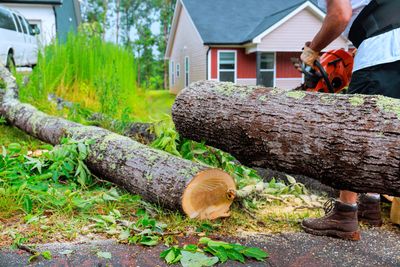
Although the terms are sometimes used interchangeably, pruning and trimming actually have distinct applications and functions, each with their own equipment and timetables.
Tree Pruning
Tree Pruning is used to remove unnecessary branches and generally associated with trees and shrubs, whose health and growth capabilities are greatly improved when infected, dead, and broken branches are cut away. Proper pruning removes potential safety hazards due to falling branches and adds to your yard’s aesthetic, allowing you to control tree shapes and sizes.
Pruning is often performed with two kinds of sheers: hand sheers, which are used to cut stems up to three-quarter inches in diameter, and loping sheers, which have longer handles and the capacity to cut through stems as thick as one and three-quarters of an inch in diameter. A pruning saw may also be used in jobs concerning thicker branches.
Most trees and shrubs require annual pruning, although timing depends on your desired result. Prune dormant trees during winter to promote strong springtime growth; conversely, cut branches in the summer to “dwarf” development. If your aim is to boost flowering capacity, prune immediately after a tree or shrub’s blooming cycle.
Tree Trimming
Tree trimming is applied to shrubs and hedges for design purposes, helps it growth in a healthy manner and it improves the appearance of the tree itself. Besides promoting a clean look, trimming alleviates excessively dense bushes which block essential sunlight and moisture from reaching your landscape.
While sheers may be used to trim trees, most trimming is done with manual, electric, or gas powered clippers.
Trimming is repeated twice a year for aesthetic maintenance, falling at least once just after flowering season. To optimize the health of smaller shrubs, trim before they reach a height of one foot.